Beyond Linear Time: On “Brackets of Time,” Relative Time, and Synchronicity in Jung
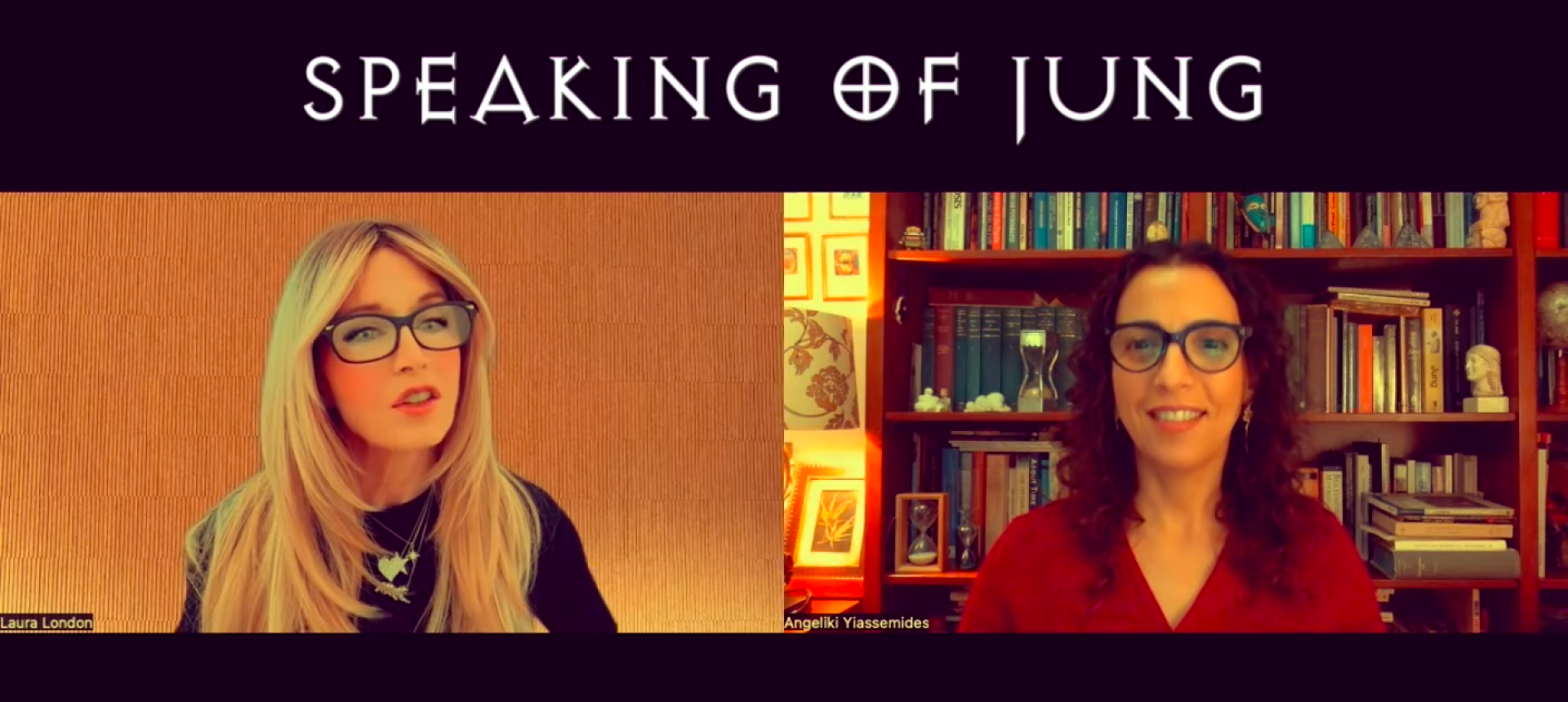
Following my interview with Laura London on her podcast Speaking of Jung: Conversations with Jungian Analysts (February 18, 2026), I received questions, as well as requests to elaborate on what I referred to as “brackets of time” when trying to explain temporality in the psyche. Allow me to clarify what I mean (a more developed treatment appears in my published work).
For Jung, the psyche has a temporally relative nature. Timelessness is not contained in the unconscious as though the emergence of consciousness produces an opposing “kind” of time (as in Freud’s model). Rather, the psyche, and the cosmos at large, in all their manifestations, are, at their core, timeless.
This is why temporal demarcations are not best understood as fixed points on a linear timeline. They function more like dimensions than coordinates. Thus, “the past” is not a sealed historical location somewhere behind us, but a past dimension of the psyche: constantly active, continually interacting with the present, and requiring renewal or modernization in the “now”. Likewise, Jung’s approach to the future is not linear and not reducible to causality. It belongs to his broader framework, which reaches beyond causal explanation in favor of a non-linear, non-causal understanding of process. Accordingly, Jung’s theory is concerned not merely with outcomes but with the “living meaning” of a process, akin to what might be compared to an Aristotelian ‘final cause’, in the sense that a process is illuminated by its possible or emergent expression.
If time is relative in the psyche as well as in the outer world, then the psyche can be understood as holding “the future” in “the present” moment. Within Jung’s acausal temporal paradigm, past, present, and future are not sequentially arranged; the future is not simply an end-of-the-line state waiting “ahead.” This also implies that causality is not the only principle in operation.
Within Jung’s theory, the acausal connecting principle of synchronicity is an “added principle” alongside causality, necessary if we are to adequately (attempt to) understand psyche and cosmos. Synchronicity suggests that there are moments when we glimpse a different arrangement of events beyond ordinary chronological time.
From the standpoint of temporal relativity, the past, present, and future are in constant interaction at any given moment. In that sense, everything is simultaneous and contemporaneous. Accepting that a non-causal principle may be operative can alter one’s experience of time and life itself; and this can extend into the analytic situation, enriching the field for analyst and analysand alike.
As I have argued elsewhere (Yiassemides, 2011; 2014/2016), time is not incidental to synchronicity but seems central to its very structure, the reason Chronos (the Greek word for time) is embedded in the term. The “time factor” in synchronicity has often been criticized or downplayed; yet I consider it vital if we are to grasp the principle as Jung intended it.
What matters is not only what happens, but how events fall together in time, and the way attention gathers around a particular temporal span. This implies a psychic “unit” of time whose parameters do not necessarily correspond to physical time (clock time). In my work I have used several metaphors – “unit of time,” “time-frames,” “brackets of time” etc. — deliberately avoiding a single fixed term, since these are only approximations of what I am trying to describe (see also, Yiassemides, 2017).
Jung defined synchronicity as “the simultaneous occurrence of a certain psychic state with one or more external events which appear as meaningful parallels to the momentary subjective state—and in certain cases, vice versa” (Jung, 1952, para 850). Importantly, even when meaningfully related events are not simultaneous in clock time, they may be experienced as belonging to the same momentary subjective state. I have proposed that this “momentary” quality can be read as a “phase” in one’s life, hence the emphasis on subjectivity (i.e., belonging to/taking place in one’s psyche rather than being objectively measurable) (Yiassemides, 2014/2016, p. 53). These subjective temporal parameters correspond to what I call "psychic units" or "brackets of time," which do not necessarily align with external chronology.
“At such times, something—i.e. a theme, a pattern, an issue, a constellated archetype—is active so that one notices certain types of experiences which correspond with (or are parallel to) certain outer events” (ibid.). In other words, the ‘bracket’ is not merely a duration: it is a time-content: a constellated field in which inner and outer events can become meaningfully coupled. As I have explained during the podcast, this "bracket of time" could be one’s entire life.
This is consistent with Jung’s earlier formulation (first presented in 1929): “I have invented the word synchronicity as a term to cover these phenomena, that is, things happening at the same moment as an expression of the same time content” (Jung, 1984, para 417). Outer and inner events are connected in time insofar as they belong to “the same time content” of the observer’s life; that is, the specific time-frame (or time bracket, or unit of time etc.) within which meaning is attributed to acausally connected events.
This, in turn, is intimately related to the idea of relative time—rather than a fixed and universal “real time”—in the sense that each observer participates in the shaping of experience depending on where she is, psychically speaking.
Synchronicity, then, can help us see the interplay of time and timelessness in “real-time,” as it were. This is not only theoretical; it also reflects Jung’s own experience and the unfolding of his thought. His openness to a non-traditional temporal framework, his sense of the interpenetration of time and timelessness, and his willingness to entertain the oneness of nature, created the conditions in which synchronistic experiences (and related phenomena such as telepathy and foreknowledge) could be taken as plausible, and at times even probable, rather than dismissed simply because they do not submit to causal explanation.
Jung, C. G. (1952) The Structure and Dynamic of the Psyche; Synchronicity: an Acausal Connecting Principle, in CW vol. 8.
Jung, C. G. (1984) Dream Analysis: Notes of the Seminars Given in 1928-1930 by C. G. Jung, W. McGuire (ed.), Bollingen Series XCIX, Princeton University Press.
Yiassemides, A. (2011) ‘Chronos in synchronicity: manifestations of the psychoid reality’, Journal of Analytical Psychology, 56: 451-470.
Yiassemides, A. (2014/2016) Time and Timelessness: Temporality in the Theory of Carl Jung. London & New York: Routledge, Taylor & Francis Group
Yiassemides, A. (2017). The thin curtain of Non-Space and Non-Time: synchronicity and prospective dreams; theory and clinical applications. In Yiassemides (Ed.), Time and the Psyche: Jungian Perspectives. London & New York: Routledge, Taylor & Francis Group